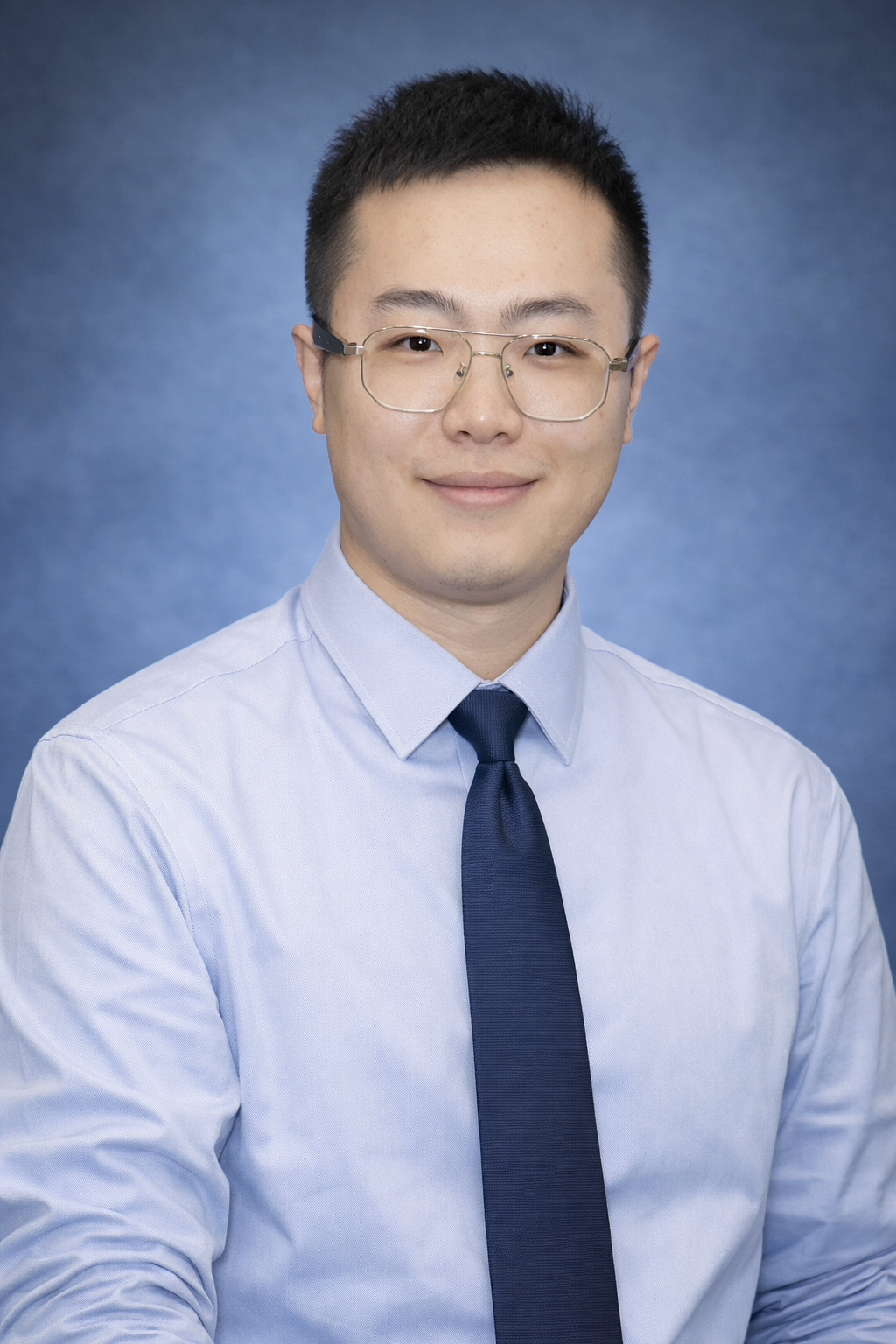
Yuan-Hao Jiang

East China Normal University PhD student at East China Normal University (ECNU)
Shanghai Jiao Tong University Joint doctoral student at Shanghai Jiao Tong University (SJTU)

Hello! I am a PhD candidate at the Shanghai Institute of Artificial Intelligence for Education, East China Normal University, majoring in AI for Education. Here, I lead a Fundamental Research Funds for the Central Universities and am expected to graduate in July 2027. At the same time, I am also a joint doctoral student at Shanghai Jiao Tong University. My research interests include AI for education, agentic workflow, human-computer interaction, and multimodal large language models.

Currently, I am a member of the Association for Computing Machinery (ACM), the Association for the Advancement of Computing in Education (AACE), and the ACM Special Interest Group on Computer-Human Interaction (SIGCHI). I also serve as a reviewer for ESWA, EAAI, ICLR, AIED, and other Top SCI journals or leading international conferences.


Education
  • Shanghai Jiao Tong University

    Shanghai Jiao Tong University

    Joint doctoral student 2024 - 2025

  • East China Normal University

    East China Normal University

    PhD student in AI for Education 2023 - 2027

  • Jiangsu University of Science and Technology

    Jiangsu University of Science and Technology

    Master of Engineering in Pattern Recognition and Intelligent Systems 2020 - 2023


Honors & Awards
  • 🏅ECNU Academic Innovation Promotion Program for Excellent Doctoral Students 2025
  • 🥈National Silver Award, China International College Students' Innovation Competition 2025
  • 🥉National Bronze Award, "Chuang Qingchun" China Youth Innovation and Entrepreneurship Competition (Technological Innovation) 2024
  • 🥈National Silver Award, China Graduate Electronics Design Contest 2023
  • 🎫Excellence Award, "Chuangqingchun" China Youth Innovation and Entrepreneurship Competition (Technological Innovation) 2023
  • 🥉National Bronze Award, "Chuangqingchun" China Youth Innovation and Entrepreneurship Competition (Digital Economy) 2023
  • 🎓Outstanding Graduate 2023
  • 🏅"Huawei Cup" China Graduate AI Innovation Competition 2023
  • 🏆National Scholarship 2022
  • 🎫Outstanding Graduate Student Model 2022
  • 🥈National Silver Award, China Graduate Electronics Design Contest 2022
  • 🥇First Prize, National Marine Vehicle Design and Production Competition 2022
  • 🥉Third Prize, "Challenge Cup" National Undergraduate Curricular Academic Science and Technology Competition 2022
  • 🎫Outstanding Graduate Student Model 2021
  • 🥇First Prize, Asia and Pacific Mathematical Contest in Modeling 2020
  • 🏆National Scholarship 2019
  • 🎫National Endeavor Scholarship 2018

News
2026
🌟 Our latest work on cross-granularity chunking for retrieval-augmented generation has been accepted as a Findings paper at ACL 2026! Project Link
Jul 02
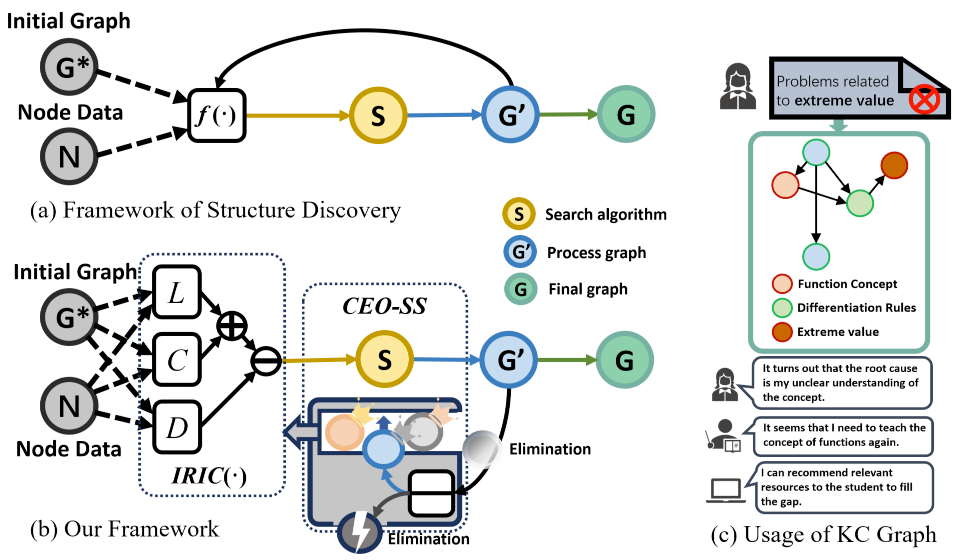
✨ A new study from our team on interpretable structure learning for knowledge components in education has been published in ACM Transactions on Intelligent Systems and Technology (TIST)! Paper Link
May 07
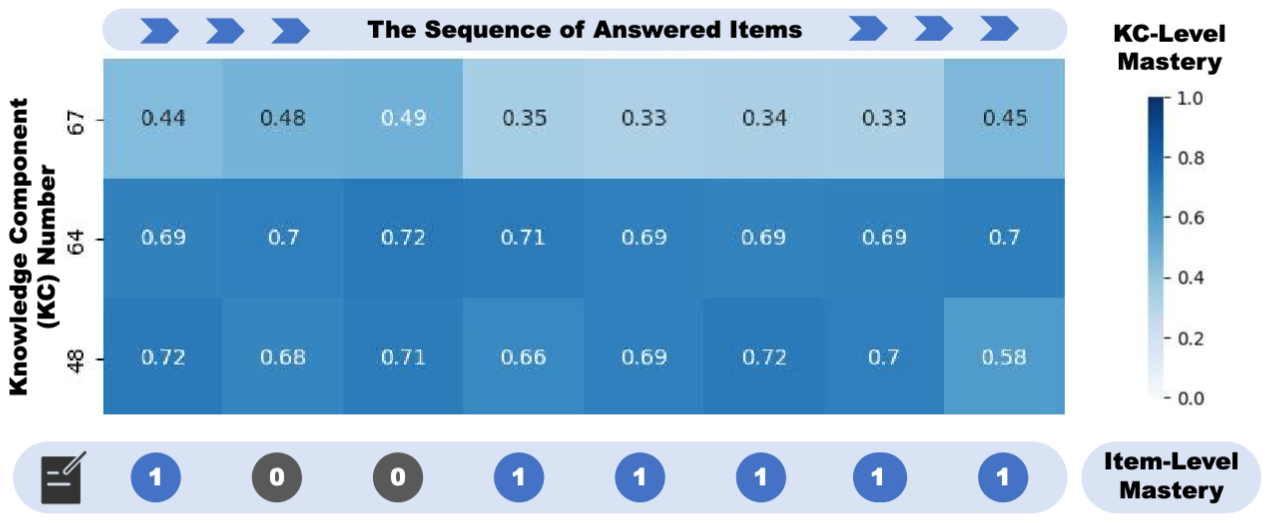
🚀 SLAM and DiaCDM, our latest studies on multi-concept knowledge tracing and cognitive diagnosis in teacher-student dialogues, have been published at ICASSP 2026! SLAM Project DiaCDM Project
May 03
2025
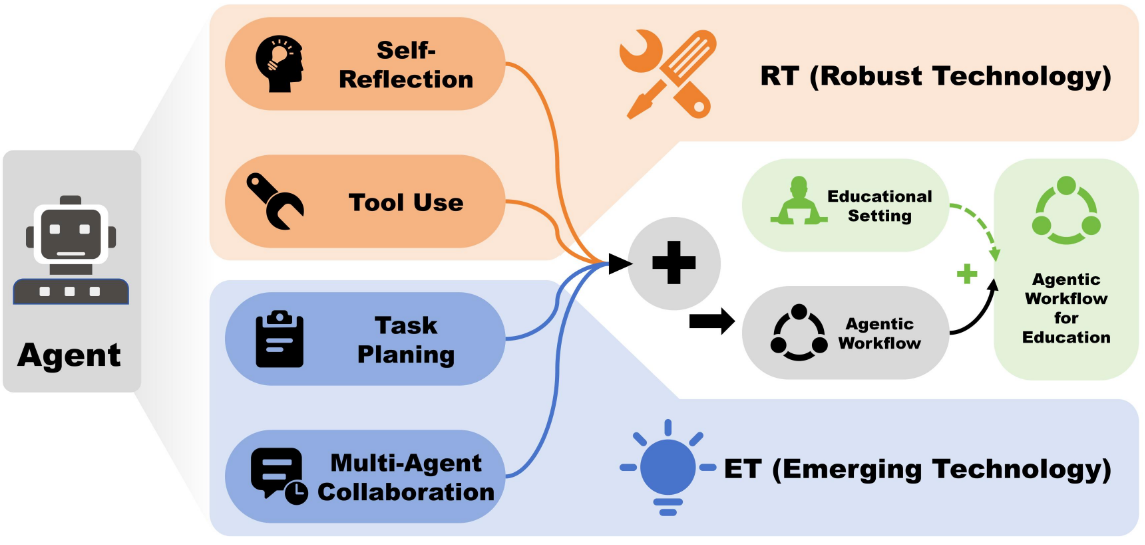
🎉 Our latest work on agentic workflows in education is now published in the Proceedings of ICCE 2025! Paper Link
Dec 01
🏆 The ECNU Academic Innovation Promotion Program for Excellent Doctoral Students, which I proposed and lead, has been officially funded by ECNU! This is the only selected project from the Shanghai Institute of Artificial Intelligence for Education.
May 30
📰 Our team’s latest research on multimodal learning analytics has been accepted for publication at CHI, the most prestigious conference in the field of Human-Computer Interaction! Paper Link
Apr 25
2024
🧑‍🏫 Our latest research on multimodal mathematics dialog-based tutoring has been accepted at NeurIPS Workshop 2024! Paper Link
Dec 14
Selected Publications (view all ) Google Scholar citations
ACL 2026
FreeChunker: A Cross-Granularity Chunking Framework
CORE-A* CCF-A
Wenxuan Zhang, Yuan-Hao Jiang, Yang Cao, Yonghe Wu
Conference Findings of the Association for Computational Linguistics: ACL 2026, 2026

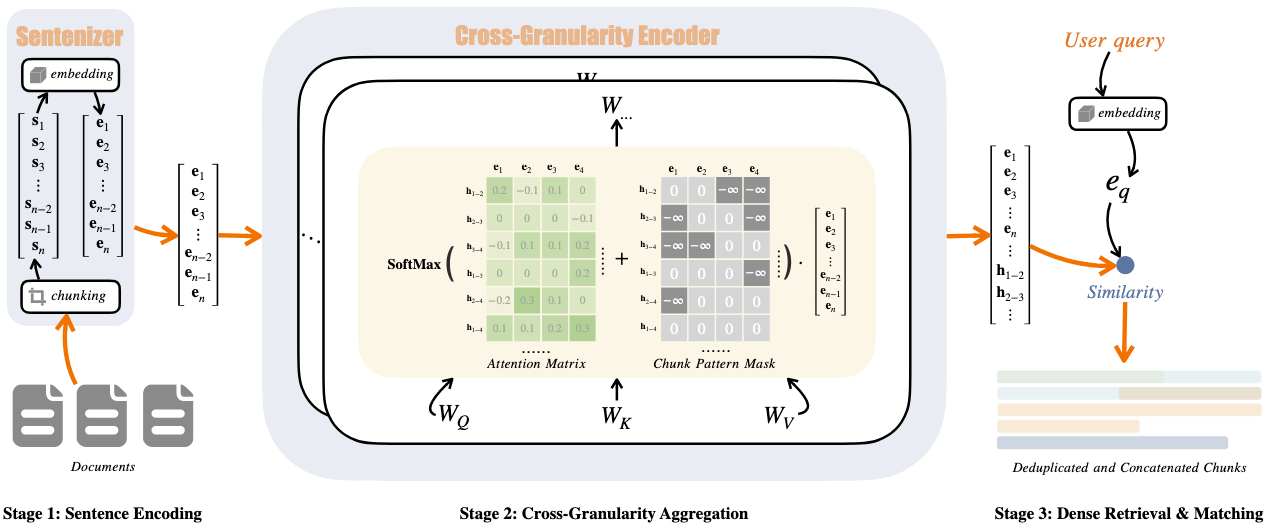
Chunking strategies significantly impact the effectiveness of Retrieval-Augmented Generation (RAG) systems. Existing methods operate within fixed-granularity paradigms that rely on static boundary identification, limiting their adaptability to diverse query requirements. This paper presents FreeChunker, a Cross-Granularity Encoding Framework that fundamentally transforms the traditional chunking paradigm: the framework treats sentences as atomic units and shifts from static chunk segmentation to flexible retrieval supporting arbitrary sentence combinations. This paradigm shift not only significantly avoids the computational overhead required for semantic boundary detection, but also enhances adaptability to complex queries. Experimental evaluation on LongBench V2 demonstrates that FreeChunker possesses significant advantages in both retrieval performance and time efficiency compared to existing chunking methods. The pre-trained models and codes are available at https://github.com/mazehart/FreeChunker.
@inproceedings{zhang-etal-2026-freechunker,
title = {{FreeChunker}: A Cross-Granularity Chunking Framework},
booktitle = {Findings of the Association for Computational Linguistics: {ACL} 2026},
author = {Zhang, Wenxuan and Jiang, Yuan-Hao and Cao, Yang and Wu, Yonghe},
date = {2026-07-02/2026-07-07},
pages = {1--6},
location = {San Diego, California, USA},
url = {https://github.com/mazehart/FreeChunker},
}
TIST 2026
Interpretable Structure Learning for Knowledge Components in Education
SCI Q1 IF = 6.6 EI-Indexed Journal
Yuang Wei, Yuan-Hao Jiang, Changyong Qi, Wei Zhang, Bo Jiang
Journal ACM Transactions on Intelligent Systems and Technology, 2026

Structural relationships among Knowledge Components (KCs) are essential for adaptive learning systems, as they support accurate cognitive diagnosis, personalized path planning, and targeted resource recommendation. However, existing approaches frequently capture correlations instead of reliable directional dependency signals and tend to converge prematurely or become inefficient as graph dimensionality grows. These limitations weaken the reliable modeling of KC-level structure, which in turn reduces interpretability and limits downstream benefits for diagnosis, planning, and recommendation. To this end, we propose a novel structure learning framework that integrates psychometric modeling with structural search. First, we design the Item Response Theory (IRT)-based Information Criterion (IRIC), an interpretable scoring function that combines information entropy with causal effect estimation grounded in IRT, jointly capturing statistical associations and directionality-sensitive signals under latent ability control. Second, we develop Co-Evolutionary Optimization for Structural Search (CEO-SS), a multi-population evolutionary algorithm with a game-inspired co-evolution mechanism that balances exploration and exploitation, avoiding premature convergence and showing robust search behavior as graph dimensionality increases within the evaluated benchmarks. Extensive experiments on three types of datasets, including benchmark causal discovery datasets, the public educational dataset, and real-world classroom data, demonstrate that our framework consistently outperforms strong baselines in accuracy and stability, with especially clear gains in adjacency recovery and more modest improvements in edge-direction recovery. In addition, expert evaluation suggests that the learned structures are more diagnostically useful, more actionable for remediation, and more pedagogically plausible than those produced by alternative scoring methods. Overall, the proposed framework provides an interpretable and practically valuable approach to learning KC structures for adaptive learning.
@article{10.1145/3815188,
title = {Interpretable Structure Learning for Knowledge Components in Education},
author = {Wei, Yuang and Jiang, Yuan-Hao and Qi, Changyong and Zhang, Wei and Jiang, Bo},
date = {2026-05},
journaltitle = {ACM Transactions on Intelligent Systems and Technology},
shortjournal = {ACM Trans. Intell. Syst. Technol.},
publisher = {Association for Computing Machinery},
location = {New York, NY, USA},
issn = {2157-6904},
doi = {10.1145/3815188},
url = {https://doi.org/10.1145/3815188},
}
ICASSP 2026
SLAM: Sequential Learning Signal Modeling for Multi-Concept Knowledge Tracing
CORE-B CCF-B
Rui Jia, Yuan-Hao Jiang, Yaomin Shen, Cheng Chen, Yuan Liu, Zi-Wei Chen, Yongquan Dong
Conference ICASSP 2026 - 2026 IEEE International Conference on Acoustics, Speech and Signal Processing (ICASSP), 2026

Knowledge Tracing (KT) aims to align with learners’ evolving knowledge states by modeling sequential learning signals, thereby enabling educators to anticipate potential dropout risks. However, most existing KT approaches assume each question involves only one concept, known as Single Concept KT (SCKT). In real-world educational scenarios, a question often involves multiple concepts, while the absence of Multi Concept KT (MCKT) methods forces models to capture only isolated factors such as forgetting, guessing, or difficulty. Moreover, compressing inherently multi-concept learning signals into single-concept representations results in irreversible information loss, which we describe as falling into Hume’s Limits of Imagination Paradox, the inability of an agent to imagine what has never been experienced. This distortion leads to overfitting and restricts both accuracy and interpretability. To address these issues, we propose Sequential Learning signAl Modeling (SLAM) for MCKT. SLAM introduces relation-aware embeddings to represent multi-concept questions, employs a monotonic attention mechanism to model forgetting behaviors in sequential signals, and designs decoders to jointly capture concept mastery, guessing, slipping, and difficulty. Experiments on two large-scale datasets show that SLAM outperforms state-of-the-art models by up to 4% in AUC, confirming its effectiveness and interpretability for MCKT.
@inproceedings{jiaSLAMSequentialLearning2026,
title = {{SLAM}: Sequential Learning Signal Modeling for Multi-Concept Knowledge Tracing},
booktitle = {{ICASSP} 2026 - 2026 {IEEE International Conference} on {Acoustics}, {Speech} and {Signal Processing} ({ICASSP})},
author = {Jia, Rui and Jiang, Yuan-Hao and Shen, Yaomin and Chen, Cheng and Liu, Yuan and Chen, Zi-Wei and Dong, Yongquan},
date = {2026-05},
pages = {4021--4025},
issn = {2379-190X},
doi = {10.1109/ICASSP55912.2026.11464304},
url = {https://ieeexplore.ieee.org/abstract/document/11464304},
}
ICCE 2025
Agentic Workflow for Education: Concepts and Applications
CORE-C
Yuan-Hao Jiang, Yijie Lu, Ling Dai, Jiatong Wang, Ruijia Li, Bo Jiang
Conference Proceedings of the 33rd International Conference on Computers in Education, 2025

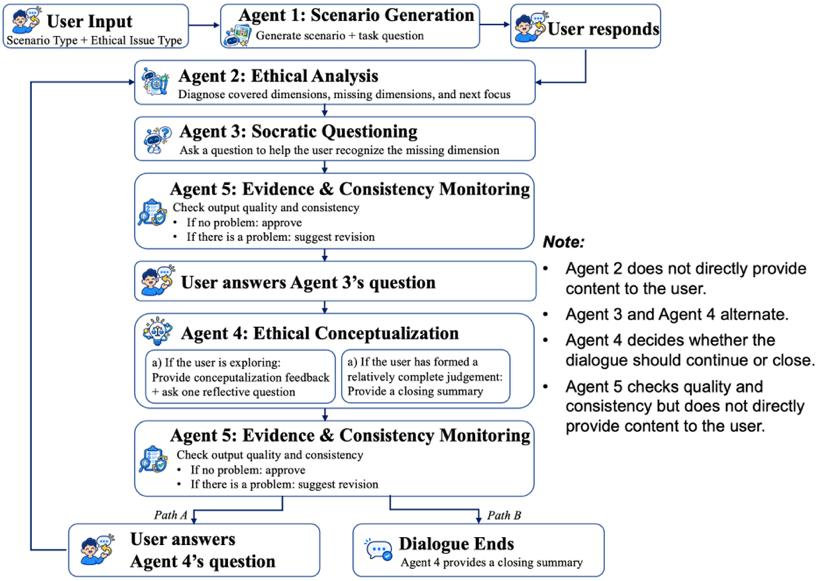
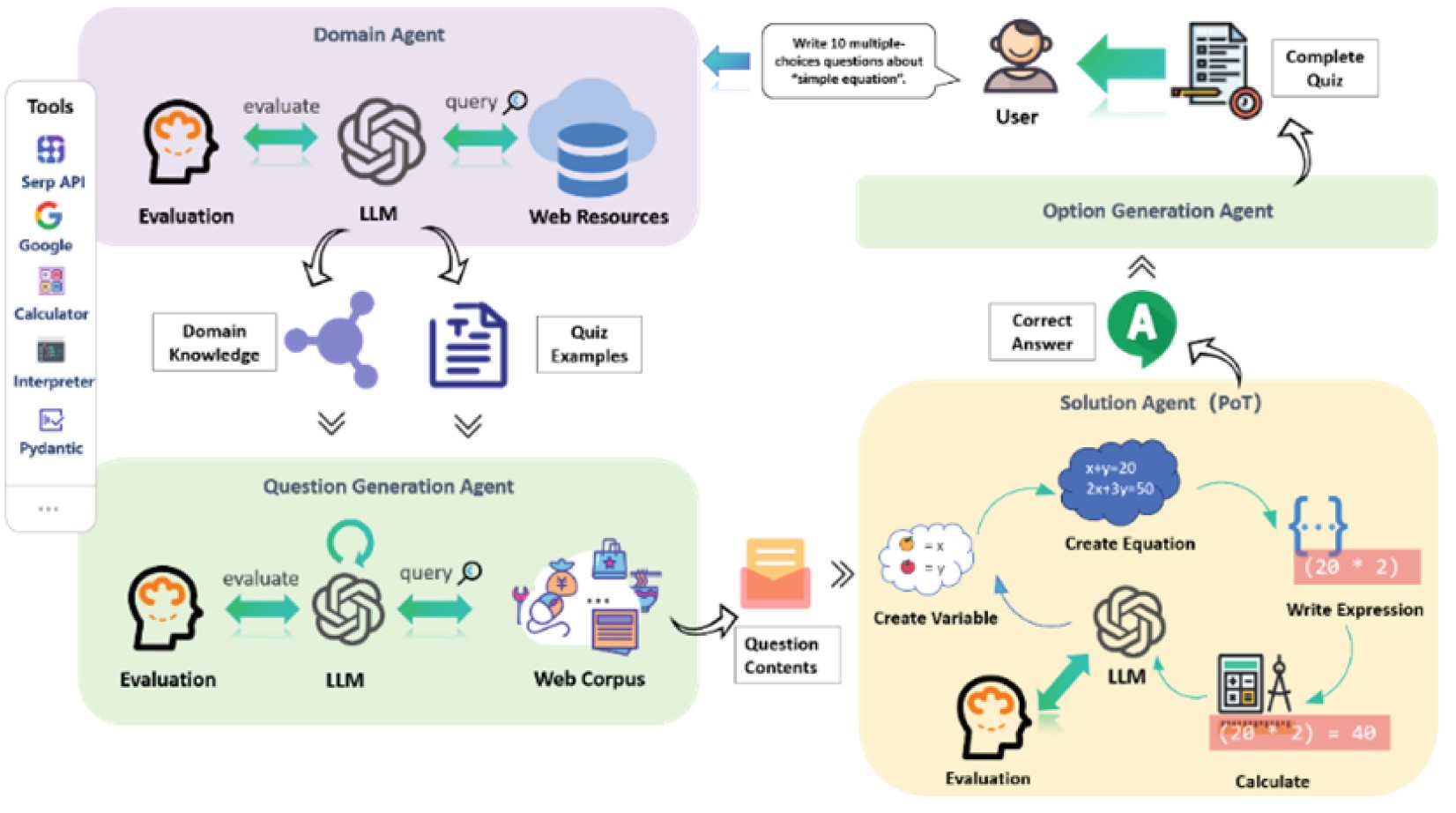
With the rapid advancement of Large Language Models (LLMs) and Artificial Intelligence (AI) agents, agentic workflows are showing transformative potential in education. This study introduces the Agentic Workflow for Education (AWE), a four-component model comprising self-reflection, tool invocation, task planning, and multi-agent collaboration. We distinguish AWE from traditional LLM-based linear interactions and propose a theoretical framework grounded in the von Neumann Multi-Agent System (MAS) architecture. Through a paradigm shift from static prompt-response systems to dynamic, nonlinear workflows, AWE enables scalable, personalized, and collaborative task execution. We further identify four core application domains: integrated learning environments, personalized AI-assisted learning, simulation-based experimentation, and data-driven decision-making. A case study on automated math test generation shows that AWE-generated items are statistically comparable to real exam questions (p = 0.439), validating the model's effectiveness. AWE offers a promising path toward reducing teacher workload, enhancing instructional quality, and enabling broader educational innovation.
@inproceedings{jiang2025agenticworkfloweducation,
title = {Agentic Workflow for Education: Concepts and Applications},
booktitle = {Proceedings of the 33rd International Conference on Computers in Education},
author = {Jiang, Yuan-Hao and Lu, Yijie and Dai, Ling and Wang, Jiatong and Li, Ruijia and Jiang, Bo},
date = {2025-12},
publisher = {Asia-Pacific Society for Computers in Education},
location = {Chennai, India},
url = {https://library.apsce.net/index.php/ICCE/article/view/6061},
pages = {1--10},
}
TVC 2025
MAS-KCL: Knowledge Component Graph Structure Learning with Large Language Model-Based Agentic Workflow
SCI Q2 CCF-C EI-Indexed Journal
Yuan-Hao Jiang, Kezong Tang, Zi-Wei Chen, Yuang Wei, Tian-Yi Liu, Jiayi Wu
Journal The Visual Computer, 2025

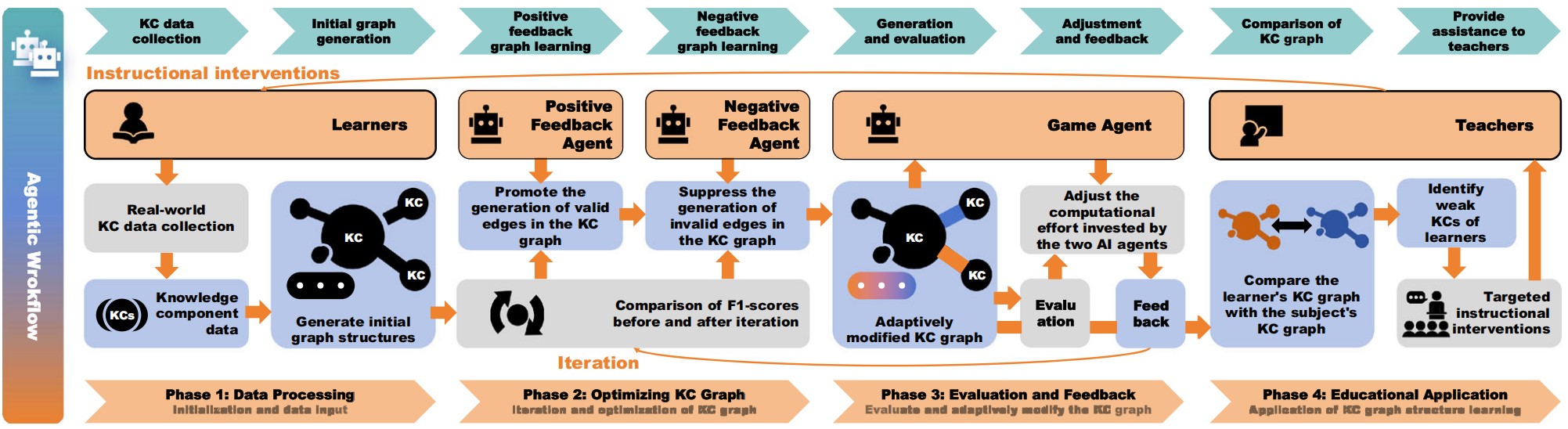
Knowledge components (KCs) are the fundamental units of knowledge in education. A KC graph illustrates the relationships and dependencies between KCs. An accurate KC graph helps educators identify the root causes of learners’ poor performance on specific KCs, enabling targeted instructional interventions. We developed MAS-KCL, a KC graph structure learning algorithm that uses a multi-agent system driven by large language models for adaptive optimization of the KC graph. A bidirectional feedback mechanism is integrated to assess the value of edges and optimize graph structure learning efficiency. We validated this approach on both synthetic and real-world educational datasets, showing its effectiveness in learning path recognition, allowing teachers to design more targeted and effective learning plans.
@article{2025-1_jiang_mas-kcl,
title = {{MAS}-{KCL}: knowledge component graph structure learning with large language model-based agentic workflow},
issn = {1432-2315},
shorttitle = {{MAS}-{KCL}},
url = {https://doi.org/10.1007/s00371-025-03946-1},
doi = {10.1007/s00371-025-03946-1},
language = {en},
journal = {The Visual Computer},
author = {Jiang, Yuan-Hao and Tang, Kezong and Chen, Zi-Wei and Wei, Yuang and Liu, Tian-Yi and Wu, Jiayi},
month = may,
year = {2025},
}
CHI 2025
Explainable Learning Outcomes Prediction: Information Fusion Based on Grades Time-Series and Student Behaviors
CCF-A CORE-A* THCPL A
Yuan-Hao Jiang, Zi-Wei Chen, Cong Zhao, Kezong Tang, Jicong Duan, Yizhou Zhou
Conference ACM CHI Conference on Human Factors in Computing Systems (CHI 2025), 2025

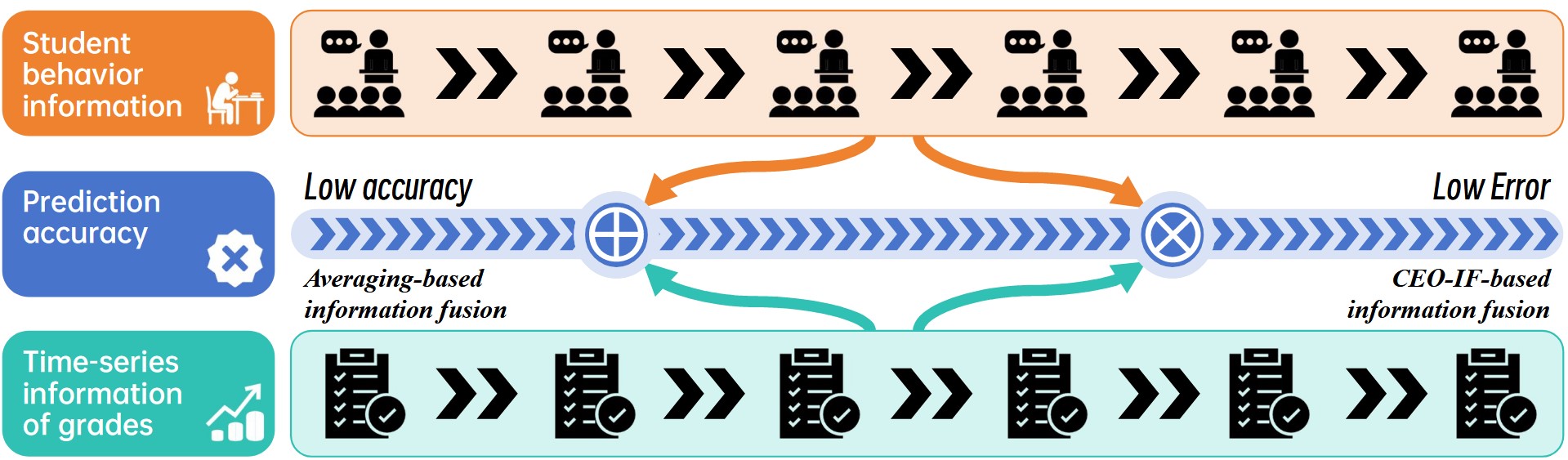
Accurately and timely predicting learners’ outcomes can assist educators in making instructional decisions or interventions. This helps prevent students from falling into a vicious cycle of decreased academic achievement and increased aversion to learning, potentially leading to dropout. Data-driven models often outperform eXplainable Artificial Intelligence (XAI) models in predicting learning outcomes, yet their lack of interpretability can hinder trust from educators. Therefore, this study developed an XAI information fusion framework that not only extracts potential trends from the time series of student grades to enhance predictive performance but also mines explicit relationships between classroom behaviors and learning outcomes. This reveals the behavioral causes behind changes in grades. Furthermore, we have made public the Dataset for Predicting Outcomes from Time sequences and Student behaviors (DPOTS), and validated the effectiveness of the developed XAI information fusion framework based on DPOTS. The results indicate that, the Mean Absolute Error (MAE) of CEO-IF was reduced by an average of 26.32% compared to the baseline algorithms, and it showed a 22.63% reduction compared to the averaging-based information fusion method. The homepage for the project can be accessed at https://doi.org/10.5281/zenodo.14958102.
@inproceedings{2025-2_jiang_explainable,
address = {New York, NY, USA},
series = {{CHI} {EA} '25},
title = {Explainable Learning Outcomes Prediction: {Information} Fusion Based on Grades Time-Series and Student Behaviors},
isbn = {979-8-4007-1395-8},
doi = {10.1145/3706599.3721212},
language = {en-US},
booktitle = {Proceedings of the {Extended} {Abstracts} of the {CHI} {Conference} on {Human} {Factors} in {Computing} {Systems}},
publisher = {Association for Computing Machinery},
author = {Jiang, Yuan-Hao and Chen, Zi-Wei and Zhao, Cong and Tang, Kezong and Duan, Jicong and Zhou, Yizhou},
month = apr,
year = {2025},
pages = {1--11},
}
ESWA 2025
Mitigating Reasoning Hallucination Through Multi-Agent Collaborative Filtering
TOP SCI Q1 IF = 7.5 CCF-C EI-Indexed Journal
Jinxin Shi, Jiabao Zhao, Xingjiao Wu, Ruyi Xu, Yuan-Hao Jiang, Liang He
Journal Expert Systems with Applications, 2025

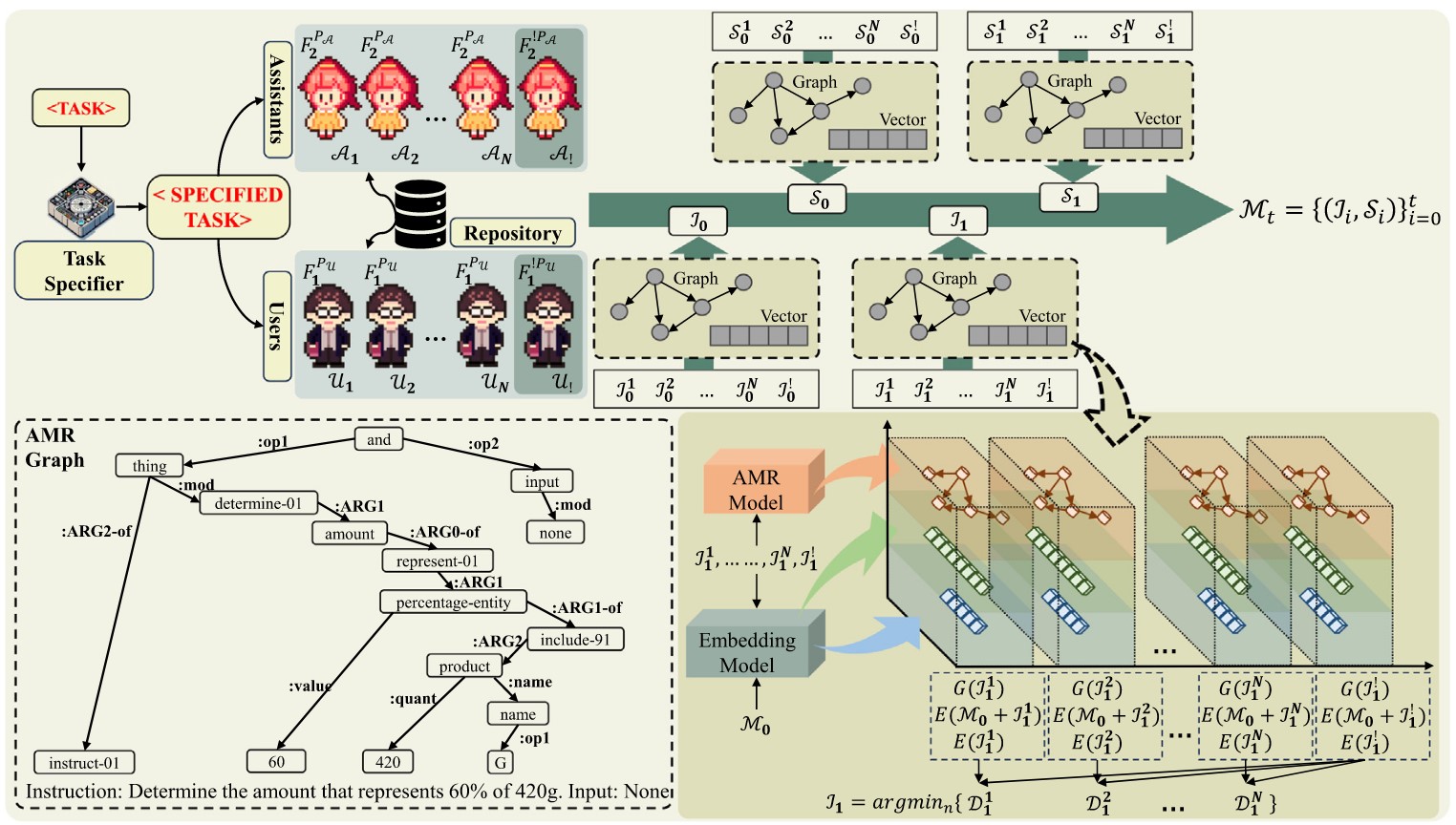
Large language models (LLMs) have demonstrated excellent performance in various natural language tasks. However, in practical applications, LLMs frequently exhibit hallucinations, generating content that deviates from instructions or facts, especially in complex reasoning tasks. Existing research has simulated real human behavior by utilizing multi-agent debate, voting, and review, enhancing the model’s reasoning capabilities. However, simple multi-agent systems have not accomplished the progressive verification of all reasoning steps. Additionally, the issues of unstable response quality and the continuous learning ability of agents have not been addressed. Therefore, in this work, we propose a Multi-agent Collaborative Filtering framework (MCF) in the form of cross-examination among agents. This aims to cross-verify each step while filtering and selecting the highest-quality responses from the response space. Additionally, to enable agents to achieve continuous learning capabilities, this paper proposes methods for the automated construction and efficient retrieval of the experience repository. Extensive experiments on ten reasoning datasets of three types (Arithmetic, Commonsense, and Symbolic) indicate that MCF can enhance the diversity of large language models, overcome hallucinations, and filter out effective responses in a rich response space. Moreover, the improvement of agents’ reasoning capabilities through the experience repository is also verified. Compared to the state-of-the-art, the method proposed in this paper shows superior performance.
@article{2025-3_shi_mitigating,
title = {Mitigating Reasoning Hallucination Through Multi-Agent Collaborative Filtering},
volume = {263},
issn = {0957-4174},
doi = {10.1016/j.eswa.2024.125723},
language = {en-US},
number = {2025},
journal = {Expert Systems with Applications},
author = {Shi, Jinxin and Zhao, Jiabao and Wu, Xingjiao and Xu, Ruyi and Jiang, Yuan-Hao and He, Liang},
month = mar,
year = {2025},
pages = {125723},
}
NeurIPS 2024
Synchronizing Verbal Responses and Board Writing for Multimodal Math Instruction with LLMs
CCF-A
Yuan-Hao Jiang, Ruijia Li, Yuang Wei, Rui Jia, Xiaobao Shao, Hanglei Hu, Bo Jiang
Conference NeurIPS'24: Conference and Workshop on Neural Information Processing Systems, the 4th Workshop on Mathematical Reasoning and AI, 2024

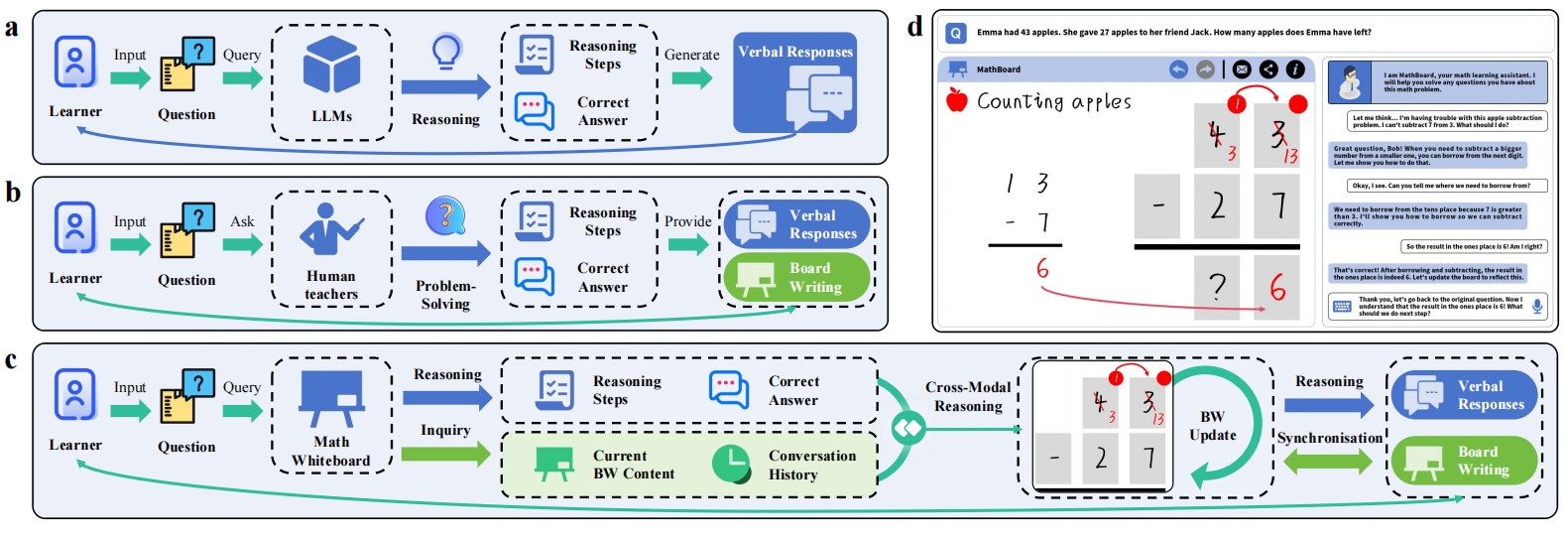
The advancement of large language models (LLMs) has greatly facilitated math instruction, with the generated textual content serving as verbal responses to address student inquiries. However, in instructional settings, teachers often provide both verbal responses and board writing (BW) simultaneously to enhance students' knowledge construction. To address this, we introduce MathBoard, a multimodal large language model (MLLM) designed for elementary mathematics education, which progressively generates BW. Our study focuses on the provision of BW to learners, aiming to reduce their cognitive load effectively. Furthermore, MathBoard can be integrated with other approaches that enhance mathematical reasoning capabilities. An empirical study involving 34 pre-service teachers demonstrated that the multimodal interactions facilitated by MathBoard were more highly accepted and impactful across various dimensions compared to text-only interactions, significantly promoting learners' social construction of knowledge.
@inproceedings{2024-5_jiang_synchronizing,	
title = {Synchronizing Verbal Responses and Board Writing for Multimodal Math Instruction with LLMs},
booktitle = {NeurIPS'24: Conference and Workshop on Neural Information Processing Systems, the 4th Workshop on Mathematical Reasoning and AI},
address = {Vancouver, Canada},
publisher = {Neural Information Processing Systems Foundation},
author = {Jiang, Yuan-Hao and Li, Ruijia and Wei, Yuang and Jia, Rui and Shao, Xiaobao and Hu, Hanglei and Jiang, Bo},
year = {2024},
pages = {46--59},
url = {https://openreview.net/forum?id=esbIrV8N12},
}
Nova Science Publishers
Enhancing Educational Practices: Strategies for Assessing and Improving Learning Outcomes
Editor
Yuang Wei, Changyong Qi, Yuan-Hao Jiang, Ling Dai
MonographNova Science Publishers: New York, USA, 2024

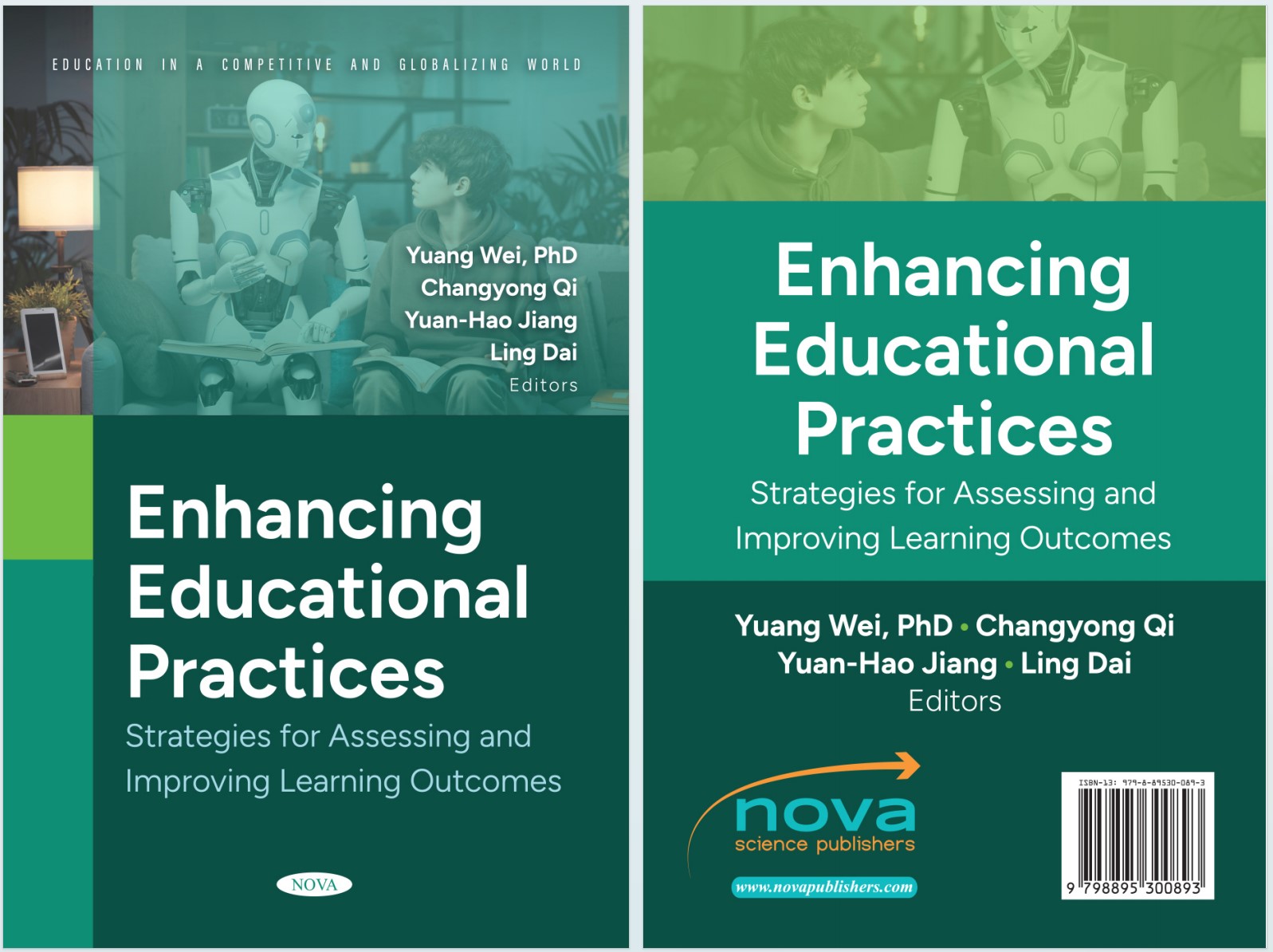
The effective assessment of learning outcomes serves as the cornerstone of educational guidance while improving learning outcomes stands as the central objective of effective teaching. As intelligent technology continues to advance, the field of education must endeavor to develop increasingly personalized, effective, and human-centric approaches to assessing and enhancing learning outcomes. To realize this vision, this book seeks to identify educational realities, dismantle educational barriers using advanced technology, and speculate on future trajectories. Throughout this book, readers will delve into cutting-edge research about the assessment and enhancement of learning outcomes, explore the latest educational technologies for this purpose, and gain a more comprehensive understanding of future research directions. Let us collectively contribute to shaping the future of AI for education.
@book{2024-8_wei_enhancing,	
title = {Enhancing Educational Practices: Strategies for Assessing and Improving Learning Outcomes},
series = {Education in a Competitive and Globalizing World},
address = {New York, NY, USA},
publisher = {Nova Science Publishers},
editor = {Wei, Yuang and Qi, Changyong and Jiang, Yuan-Hao and Dai, Ling},
year = {2024},
isbn = {979-8-89530-030-5},
doi = {https://doi.org/10.52305/RUIG5131},
}
AIED 2024
Generating Contextualized Mathematics Multiple-Choice Questions Utilizing Large Language Models
CAAI-A ECNU-Recommended Education Conferences
Ruijia Li, Yiting Wang, Chanjin Zheng, Yuan-Hao Jiang, Bo Jiang
Conference Artificial Intelligence in Education. Posters and Late Breaking Results, Workshops and Tutorials, Industry and Innovation Tracks, Practitioners, Doctoral Consortium and Blue Sky (AIED 2024), 2024

Applying mathematics to solve authentic question play important roles in mathematics education. How to generate high-quality multiple-choice questions that have authentic context is a great challenge. By combining multiple iterations of large language model dialogues with auxiliary external tools and the LangChain framework, this work presents a novel method for automatically generating contextualized multiple-choice mathematics questions. To check the quality of generated questions, 30 questions were randomly selected and 13 human experts were invited to rate these questions. The survey result indicates that the questions produced by the proposed method exhibit a significantly higher quality compared to those generated directly by GPT4, and are already quite comparable in performance to questions that are meticulously crafted by humans across multiple dimensions. The code is available on the project home page: https://github.com/youzizzz1028/MCQ-generation-Chain.
@inproceedings{2024-2_li_generating,	
title = {Generating Contextualized Mathematics Multiple-Choice Questions Utilizing Large Language Models},
booktitle = {Artificial Intelligence in Education. Posters and Late Breaking Results, Workshops and Tutorials, Industry and Innovation Tracks, Practitioners, Doctoral Consortium and Blue Sky (AIED 2024)},
address = {Cham},
publisher = {Springer Nature Switzerland},
author = {Li, Ruijia and Wang, Yiting and Zheng, Chanjin and Jiang, Yuan-Hao and Jiang, Bo},
year = {2024},
isbn = {978-3-031-64315-6},
doi = {10.1007/978-3-031-64315-6_48},
pages = {494--501},
language = {en},
}
All publications